superfoods from switzerland and the world what works and what is hype
Spirulina in a breakfast smoothie. Goji berries in Bircher muesli. Matcha latte in the morning. Turmeric shot before sport. Hemp seeds sprinkled over a salad. The word
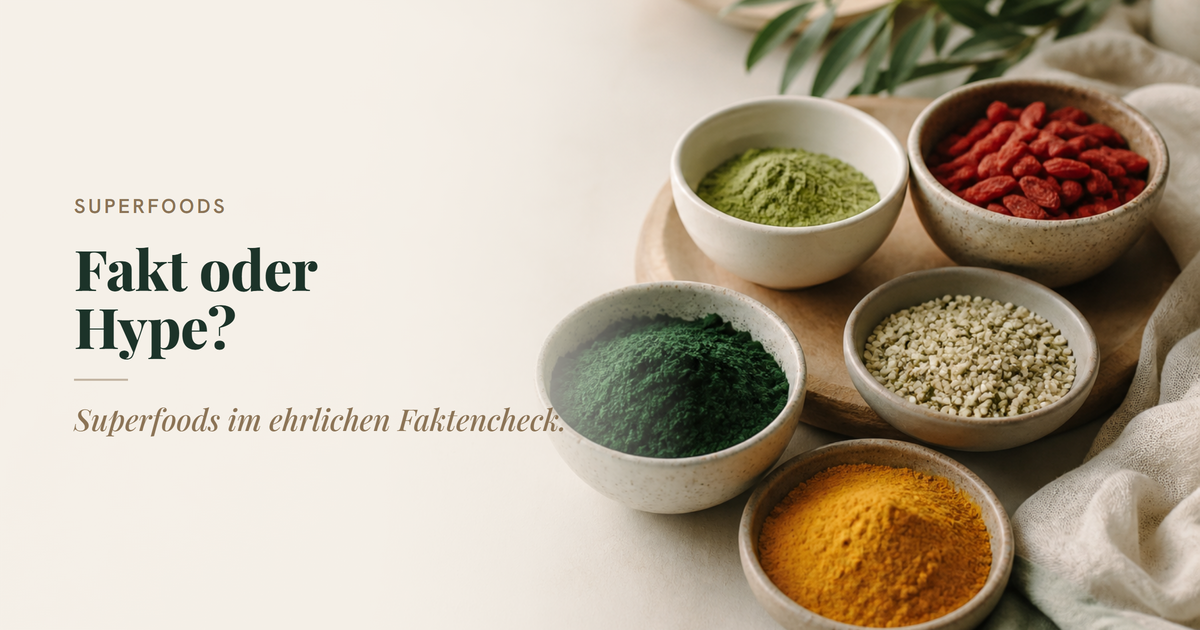
Spirulina in a breakfast smoothie. Goji berries in Bircher muesli. Matcha latte in the morning. Turmeric shot before sport. Hemp seeds sprinkled over a salad. The word „superfood“ has become so popular over the last fifteen years that hardly anyone asks what it actually means.
The short answer: legally nothing. „Superfood“ is not a scientific category and is not a protected term. The European Union even prohibited the use of the word alone to make health claims if no specific, proven effects are mentioned. Nevertheless, the market is huge - and not everything on the packaging delivers what the advertising promises.
We take a closer look at five of the most popular representatives. Pro food: What the studies show - and where the hype goes beyond that.
Spirulina
What it is. Strictly speaking, it is not a foodstuff, but a cyanobacterium of the genus Arthrospira platensis and A. maxima. Cultivated in shallow pools in sunny countries, dried and sold as a green powder.
What works. The nutrient profile is indeed exceptional. Spirulina consists of 60-70 % protein, contains all essential amino acids, plenty of iron, magnesium, calcium, gamma-linolenic acid (GLA) and the blue pigment Phycocyanin - a demonstrably powerful antioxidant. A dense micronutrient concentrate for people on a plant-based diet.
Where the hype begins. There is a widespread claim that spirulina is a source of vitamin B12 for vegans. This is wrong. A fundamental study by Watanabe et al. (J Agric Food Chem, 1999) showed that around 83 % of the „B12″ in spirulina tablets Pseudo-B12 is - structurally similar, but biologically inactive. Worse still, the pseudovitamin binds to the same transport molecules as real B12 and can block its absorption. Since 2009, the American Dietetic Association has expressly warned against considering spirulina as a reliable source of B12.
Verdict: Part fact, part hype. Valuable protein and micronutrient concentrate - but no substitute for a source of B12.
Matcha
What it is. Pulverised green tea leaf from specially shaded Camellia sinensis-plants. Unlike classic green tea, the whole leaf is absorbed, not just its infusion.
What works. It is precisely this consumption of the whole leaf that makes matcha biochemically interesting. The central active ingredient is called EGCG (epigallocatechin gallate) - a catechin from the polyphenol family with well-documented antioxidant effects. A standard portion of matcha (2 g powder) provides about 100-200 mg EGCG, that three to ten times more than a cup of classic infusion green tea. A 2018 in Plant Foods for Human Nutrition The results of a comparative study published by the European Commission confirm that ceremonial-grade matcha contains around 56 mg EGCG per gram of dry matter, while classic bagged tea contains around 46 mg.
Where the hype begins. A well-known claim is that matcha contains „137 times more antioxidants than green tea“. This figure comes from a single study from 2003, in which matcha was compared with a specific Chinese variety - not in the infusion consumed, but on a dry matter basis with methanol extraction. In realistic consumption conditions, the difference is a factor of around 3 to 10. The belief that „more is better“ with EGCG is also deceptive: the European Food Safety Authority (EFSA) warns against daily doses of over 800 mg EGCG, because highly concentrated extracts have been associated with liver damage.
Verdict: Predominantly fact. Genuine EGCG benefit - but not to the extent often advertised.
Goji berries
What they are. The dried fruits of the plant Lycium barbarum, originally cultivated in the northern region of Ningxia in China.
What works. Goji berries have an unusually high content of Zeaxanthin - a carotenoid that is stored in the eye (in the macula) where it filters blue light. 60 to 80 % of carotenoids in goji berries is zeaxanthin, often in its particularly stable form as zeaxanthin dipalmitate. A study from Optometry and Vision Science showed that 90 days of goji berry juice significantly increased zeaxanthin levels and antioxidant capacity in older subjects. This is a plausible - albeit still clinically limited - effect for eye health in age-related macular degeneration.
Where the hype begins. Goji berries are often advertised as „the king of antioxidants“. If you actually measure them, they have an ORAC value of 4 310 under normal blueberries (4 633) and well below pomegranate seeds (4,479). Many of the claimed effects - anti-ageing, metabolism, weight loss - are also predominantly based on animal or cell studies, not on large randomised controlled trials on humans.
Verdict: Part fact, part hype. Real eye benefits from zeaxanthin - but no universal antioxidant miracle.
Hemp seeds
What they are. The hulled seeds of Cannabis sativa (industrial hemp, without psychoactive effect). Traditionally known in Switzerland as „hemp nuts“.
What works. Hemp seeds are probably the least overrated food on the list. About 25 % of calories come from protein - and from a complete protein with all nine essential amino acids. This is a rarity in the plant world. The fat content is around 30 % and the fatty acid distribution is close to the optimum: Omega-6 to omega-3 in a ratio of 2:1 to 3:1 (the typical Western diet is around 15:1, which is considered pro-inflammatory). They also contain GLA, high amounts of magnesium (around 45 % of the daily dose per 30 g), manganese, phosphorus and zinc.
Where the hype begins. Hardly at all, in fact. One small caveat: the omega-3 in hemp seeds is alpha-linolenic acid (ALA) - plant-based. The more efficient forms EPA and DHA from fish are only produced to a small extent by the body itself from ALA. If you want to maximise your supply of omega-3, there is no getting around fish oil (or algae oil).
Verdict: Fact. Probably the most serious entry in the list.
Turmeric
What it is. The rhizome of the plant Curcuma longa, a relative of ginger. The yellow colour comes from a class of substances, the Curcuminoids, with the main representative Curcumin.
What works. Curcumin is in vitro and a potent modulator of inflammatory signalling pathways in animal models - among other things, it inhibits the NF-κB pathway, which plays a central role in chronic inflammation. Antioxidant, anti-inflammatory and potentially anti-cancer properties have been well documented in the laboratory.
Where the hype begins. The big catch is the Bioavailability. Curcumin is practically insoluble in water, is poorly absorbed in the intestine, metabolised very quickly in the liver and excreted via the bile. Even after oral doses of up to 12 g, the measurable plasma levels remain in the low micromolar range. In concrete terms, this means that a teaspoon of turmeric in curry or a commercially available turmeric capsule without any further formulation has practically no systemic effect. However, the well-known study by Shoba et al. (1998) showed that the simultaneous intake of Piperine (from black pepper) increases curcumin bioavailability in humans by up to 2 000 % increased. Liposomal, micellar or phospholipid-coupled formulations can also significantly improve this.
Verdict: Part fact, part hype. Real mechanism of action - but without the right formulation, hardly anything reaches the body.
What holds the five together
What is striking is that each of these foods contains a genuine, biochemically verifiable active ingredient - and at least one popular claim that goes beyond the evidence. If you want to use superfoods sensibly, there are three questions you need to ask yourself:
- Which specific active ingredient is meant? Phycocyanin, EGCG, zeaxanthin, omega-3 or curcumin are very different molecules with very different effects.
- In what form is it recorded? Turmeric without piperine, B12 from spirulina, or uncrushed goji berries hardly reach the site of action.
- Is this also available locally? Swiss blueberries, linseed, rapeseed oil or nettles cover a large part of the same effects - often more cheaply and with a shorter transport chain.
Supplement instead of replacement
Superfoods are no substitute for a balanced basic diet - but they can supplement it. What we said at the beginning of this text is crucial: the shape determines the effect. A powder in a smoothie bowl is one thing. A scientifically designed blend that combines several active ingredients in an absorbable form is another.
In the nutricosmetic products from Bettervita This is exactly the approach that is followed in the case of the new product: hydrolysed or pre-dissolved active ingredients, combined with their biological cofactors (vitamin C, zinc, hyaluron, biotin) - in liquid form, so that the disintegration and dissolution step is eliminated and absorption begins immediately.
Real effect does not come from the label. It comes from the active ingredient - in the right form, with the right cofactor, at the right moment.
Beauty begins from within.
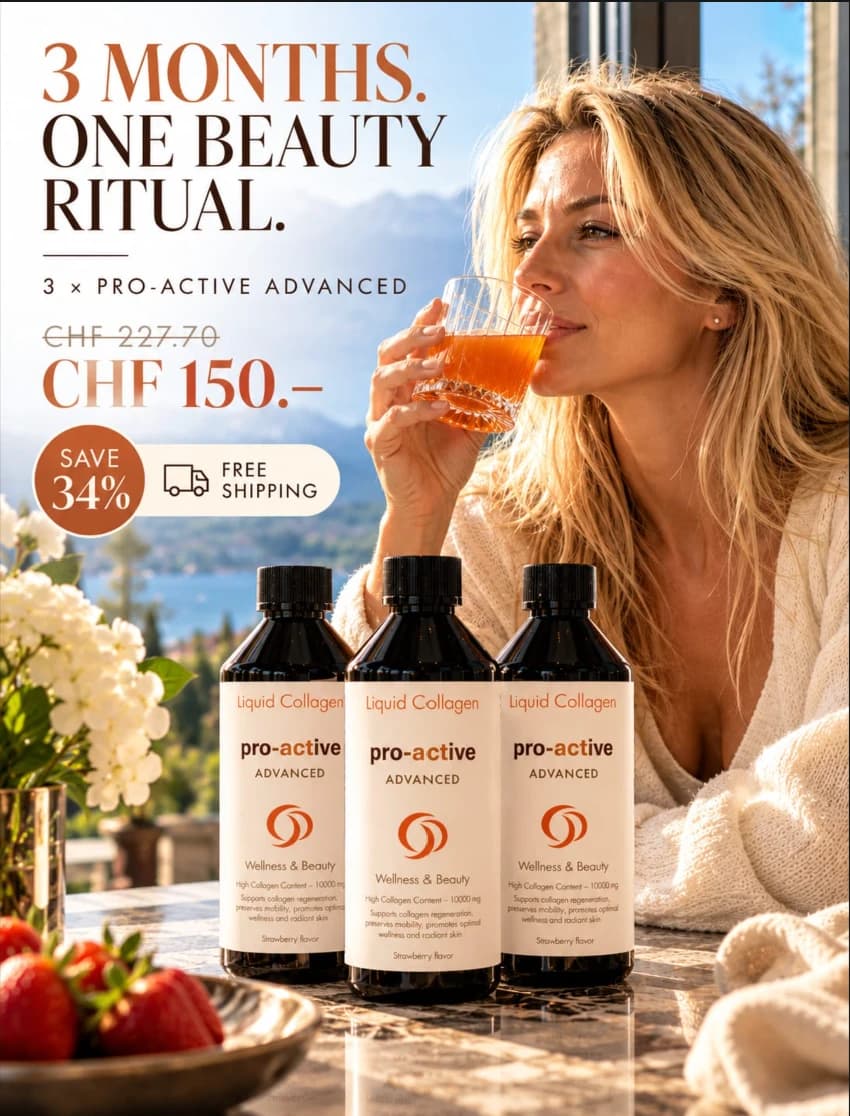
Knowledge is the first step — application is the second. Liquid Collagen Pro-Active Advanced: high-dose, bioavailable, developed in Switzerland.
Discover the product →Collagen Pro-Active Advanced
Stress, cortisol and the skin: Why tension shows on your face
Chronic stress raises cortisol levels – this slows down collagen production and weakens the skin barrier. How stress manifests itself on the skin, and what really helps.

Silicon: The forgotten element for connective tissue, hair and nails
Silicon helps to stabilise the collagen network and is associated with stronger nails and healthier hair. What the research says about this underrated element.

Collagen for athletes: tendons, ligaments and faster recovery
Taking collagen peptides with vitamin C before a workout can support tendons and ligaments. What studies show – and who might benefit from this.
Comments
No comments yet. Be the first to comment.
Write a comment